Lamination Requirements for High-Speed and High-Frequency PCBs
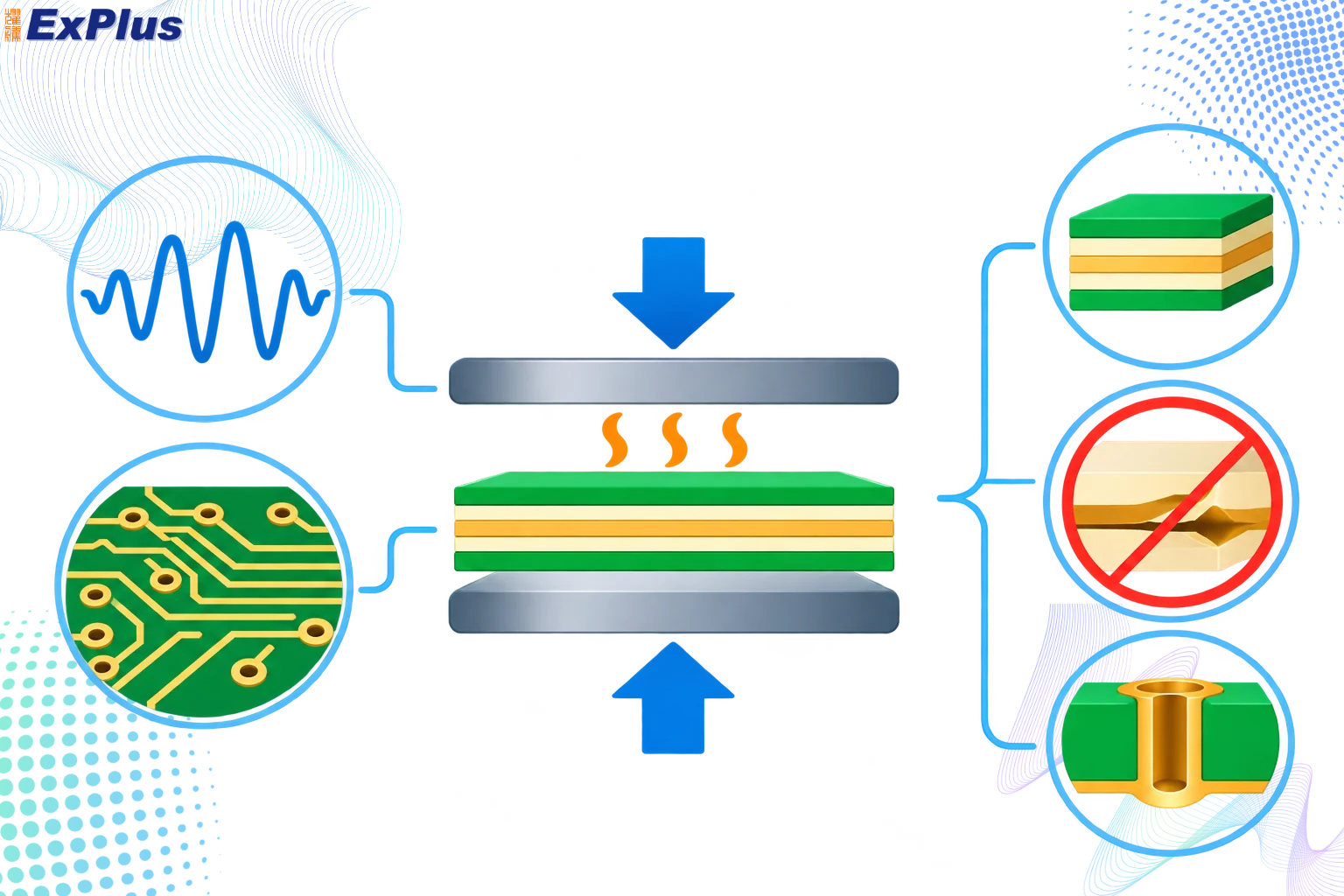
For high-speed and high-frequency (RF) PCBs, the lamination process requires tighter control of material properties and process parameters.
These types of PCBs commonly use specialized low-Dk (low dielectric constant) and low-Df (low dissipation factor) materials, such as PTFE-based materials, Megtron, and Rogers materials.
Because these materials have different resin flow characteristics, coefficient of thermal expansion (CTE), and thermal properties compared with conventional FR-4, the lamination process must:
· Use more precise temperature and pressure profiles.
· Control resin flow to minimize variations in dielectric thickness and maintain consistent controlled impedance.
· Prevent delamination and PTH (plated through-hole) reliability issues, including potential damage to or cracking of the hole wall.
For high-frequency PCBs, the lamination process is a critical factor in maintaining signal integrity.
Therefore, these applications require higher levels of process control, equipment capability, and manufacturing expertise than conventional PCB fabrication.
Maybe you would like to read more:


